
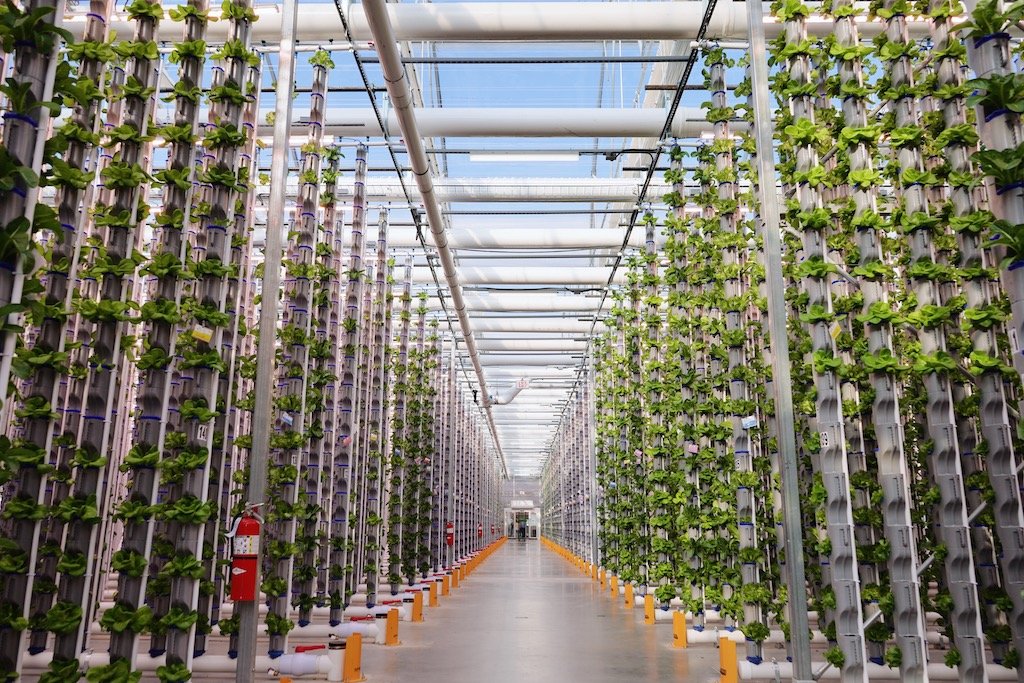
What technology is used in vertical farming?
28 March 2024
Vertical farming is a revolutionary agricultural practice that utilizes innovative technologies to grow crops indoors in vertically stacked layers. This method has emerged as a sustainable solution to address food security challenges, particularly in urban areas with limited arable land. But what are the technologies that make vertical farming possible? Let’s dive in.
1. Hydroponics: Water-Based Growing Systems
Hydroponics is one of the core technologies used in vertical farming. It allows plants to grow without soil by delivering nutrients directly to their roots through a water-based solution.
- How it Works: Plants are suspended in water, where their roots absorb nutrients and oxygen.
- Advantages:
- Uses up to 90% less water compared to traditional farming.
- Reduces the need for harmful pesticides and fertilizers.
2. Aeroponics: Mist-Based Growing Systems
Aeroponics takes farming innovation a step further by using mist to deliver nutrients and water to plants.
- How it Works: Plant roots are suspended in the air and misted with a nutrient-rich solution.
- Advantages:
- Uses 95% less water than soil-based methods.
- Promotes faster plant growth and higher yields.
3. Aquaponics: Combining Fish Farming with Plant Growth
Aquaponics combines aquaculture (raising fish) with hydroponics to create a symbiotic ecosystem.